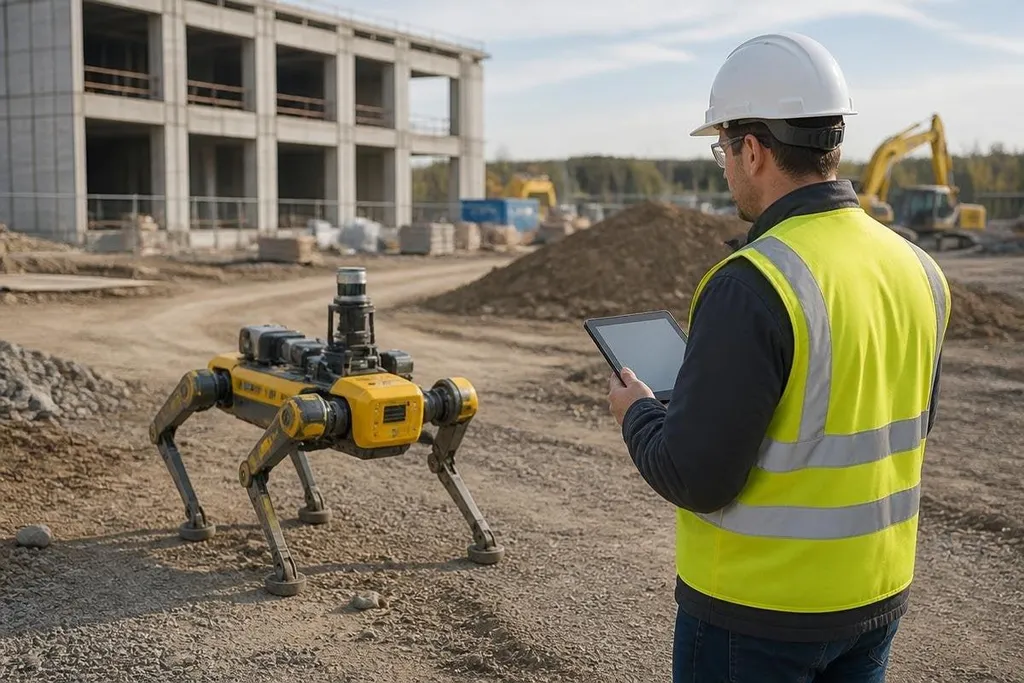
These machines may print concrete, move materials, scan a site, or guide a tool. The useful question is whether one can repeat a single job safely on rough ground, around people, and through changing weather.
New systems will be judged by that daily work, not by the shape of the robot. For a site manager, the machine has to fit the task, the crew, and the schedule.
- The first test is task fit: a robot built for bricklaying won't solve material transport.
- Site data matters: cameras, LiDAR, and position sensors help the robot understand its work area.
- Human control remains part of the plan: remote operation can cover tasks the robot can't handle alone.
The work comes before the machine
Construction sites contain many tasks, but most are not ready for full autonomy.
A robot may need to carry blocks along a set route, drill repeated holes, scan a wall, or place material at a known location. Each job has a different payload, tool, speed, and safety problem.
That makes task choice the first design decision. A tracked base may suit broken ground, while a robotic arm may suit repeated placement from a fixed position. A small inspection robot could collect site data without carrying a heavy load.
The machine also needs a clear handoff. If a worker must guide every movement, the robot may still save time by handling the slow or tiring part of the job. If the worker has to correct it every few seconds, the system has moved work rather than removed it.
Why construction is hard for robots
A factory gives a robot marked floors, fixed lighting, and known objects. A construction site changes as crews pour concrete, stack materials, move barriers, and remove walls. Dust can block cameras, uneven ground can upset a mobile base, and rain can affect sensors and electrical parts.
The robot therefore needs more than a route on a digital map. It needs sensors that check its position, detect objects, and stop movement when a person enters its path. LiDAR measures distance with laser pulses; cameras add visual detail. Together, those sensors can help the control system build a working view of the site.
That view will still have gaps. A sheet of plastic can look like an opening, a pallet can block a planned route, and a tool can wear down during a shift. Remote operation gives the crew a way to step in when the robot reaches a case its software does not handle.
The useful role for autonomy
Autonomy works best when the robot has a narrow job and a clear limit. It can repeat a movement, check a measurement, or follow a route, then stop when its sensors find something outside the plan. That pattern gives the crew a known point for inspection.
Teleoperation means a person controls the robot from another location. A remote operator may guide a machine through a difficult section, then return control to the software for the repeated part. This setup can reduce the need to place a worker beside a moving arm or vehicle, but it still depends on a stable link and a trained operator.
Construction robots need a record of what happened after the operator handed control back to the software. Reporting from Robot 24 can tie that handoff to a named machine, work site, task, and failure point. Those details show where workers still need to step in.
The human role also changes. Workers may set up the task, check the site map, load materials, inspect the result, and take control during a fault. That work needs clear controls, visible stop functions, and a record of what the robot did.
What buyers should check
A site manager comparing systems can use this list before a site trial:
- Name the repeated task: write down the exact movement, tool, material, and finish standard.
- Measure the work area: check slopes, floor strength, door widths, lighting, dust, rain, and nearby people.
- Set the handoff point: decide when the software stops and a remote operator takes control.
- Check the data path: confirm how maps, sensor records, faults, and work results reach the crew.
- Price the whole setup: include tools, charging, training, site changes, repairs, and operator time.
- Define the pass mark: agree on the output, stop rate, inspection result, and time saved before testing.
The opposing view is that a flexible humanoid could handle many tasks without changing the site. That may help in some places, but a narrow machine is easier to test when the task, safety boundary, and result are clear.
I'd wait before buying a general-purpose construction robot unless the maker can show repeated work on a site like yours. The useful proof is not a longer demo; it's a logged trial that records completed tasks, human takeovers, stops, repairs, and the cost of each finished unit.